

Whether you are launching a new product, supporting a long-established brand, or managing a full portfolio across multiple SKUs, use these as a checklist during your evaluation calls.
1. Can you develop a formula, or do you only fill formulas I provide?
This is the first fork in the road. Some manufacturers only fill customer-supplied formulas. Others offer full formulation development. If you do not have R&D capabilities in-house, a partner who can develop and optimize a formula for manufacturability dramatically simplifies your path to market. The strongest partners support both paths, whether you are starting from a rough concept, an existing product you want replicated, or a finished formula you already own.
We work both ways. If your formula and packaging are ready, our I Have a Formula & Packaging path moves you straight toward validation and production. If you are still developing, our R&D team can take you from concept to a production-ready formula through Formula Development.
2. Do you run both high-speed and flexible production lines, and how does that affect minimum order quantities?
This matters more than most buyers realize. A manufacturer with only high-speed commodity lines will struggle with specialty formulas, unique packaging, or smaller runs. One with only small-batch capacity may not be able to scale the volume work. The ideal partner runs both: a high-speed line for volume programs and a flexible line built for specialty formulas, unique components, and lower volume run sizes. That two-line setup also directly affects minimum order quantities. MOQs vary widely across the industry, from a few thousand units at smaller specialty fillers to 50,000 or even 100,000+ units at large commodity facilities. A manufacturer running both line types can support specialty and lower volume runs while still scaling national programs. If a prospective partner will not discuss MOQs openly, treat that as a warning sign.
Many prominent brands need support for both high volume products and legacy, lower volume product lines, which we are well positioned to support across both our high-speed aerosol line and highly flexible aerosol line. This versatility allows us to support our customer's full brand portfolio. Our aerosol operation runs volume programs at up to 100 cans per minute across steel, aluminum, and DS can styles on the high-speed line, while our flexible line handles specialty formulas, unique components, and lower volume runs.
We talk minimums through openly, too, so the number you hear up front is the number you can plan around.
3. How do you approach mechanical componentry and spray experience design?
The way a product is delivered is part of the product experience. Mechanical componentry, including valves, actuators, dip tubes, and button styles, determines how your formulation reaches the end user. The right partner does not just pick components off a shelf. They help you design a spray experience tailored to your formulation and your end user, whether that means a continuous spray, a fan pattern, a fine mist, or a specialty configuration. Ask whether the manufacturer takes an active role in component selection or simply defaults to whatever they stock.
We work with you to select the right components and tailor the delivery of your formulation, which is a standard part of how we bring an aerosol product to the line.
4. Can you support my regulatory and compliance needs?
Aerosol products can fall under FDA, EPA, DOT, CARB, FHSA, and other regulatory frameworks depending on the category. Ask whether the manufacturer offers R&D, regulatory, and quality support, and whether they can guide you on labeling requirements, including regulatory and multilingual labeling. A partner with genuine regulatory expertise, including relationships with industry bodies like HCPA, saves you from expensive mistakes and keeps your product compliant as regulations evolve.
Our R&D, regulatory, and quality team supports products across those frameworks, flags compliance considerations early, and helps you keep labeling accurate and current as the rules change.
5. Which propellants do you support?
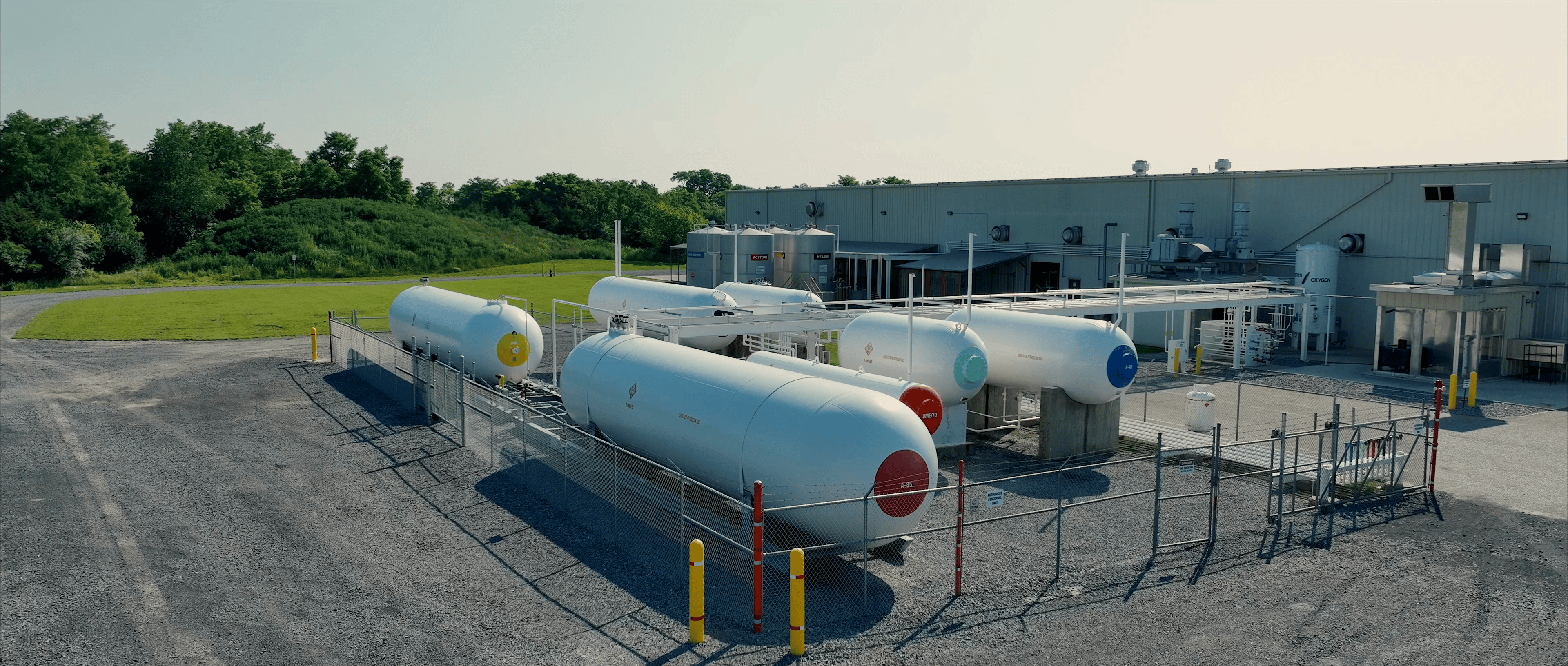
Propellant selection drives spray performance, regulatory classification, and cost. A capable aerosol manufacturer offers a full propellant portfolio and guides you toward the right choice for your product, not just whatever is easiest to run. At minimum, ask whether they support hydrocarbon propellants (A46, A70, A85, A108), dimethyl ether (DME), CO2, nitrogen, and 152A. The breadth of the portfolio tells you how much formulation flexibility you will have.
We run that full portfolio, and our R&D and regulatory team helps you weigh performance, classification, and cost together rather than forcing the decision to fit the line.
6. Can you handle flammable formulations safely?
Many aerosol products are flammable, and handling them requires dedicated, properly engineered infrastructure. Ask whether the manufacturer has flammable-rated mixing rooms with appropriate safety and engineering controls. This is both a safety and a compliance issue, and a manufacturer cutting corners here puts your product and your brand at risk. A serious partner will be able to describe their controlled handling of flammable propellants and their process controls for repeatability.
We handle flammable formulations in flammable-rated mixing rooms with process controls built for repeatability, and decades of running flammable propellants safely at our facilities is part of why national brands trust us with products that demand it.
7. What in-house mixing and batching capacity do you have?
Filling is only half the job. The bulk product has to be mixed and batched first. Ask about mixing capacity (for example, mixers ranging from 25 HP to 75 HP with different blade options), the ability to handle both solvent-based and water-based systems, and whether they have stainless-steel and poly mixing vessels. A manufacturer with integrated mixing and batching under the same roof as filling gives you more control and fewer handoffs.
Ours is integrated end to end: mixing and batching sit alongside filling as part of our manufacturing operation, with capacity spanning solvent-based and water-based systems, stainless-steel and poly vessels, and mixers sized to match your batch and formula.
8. What quality controls are built into your lines?
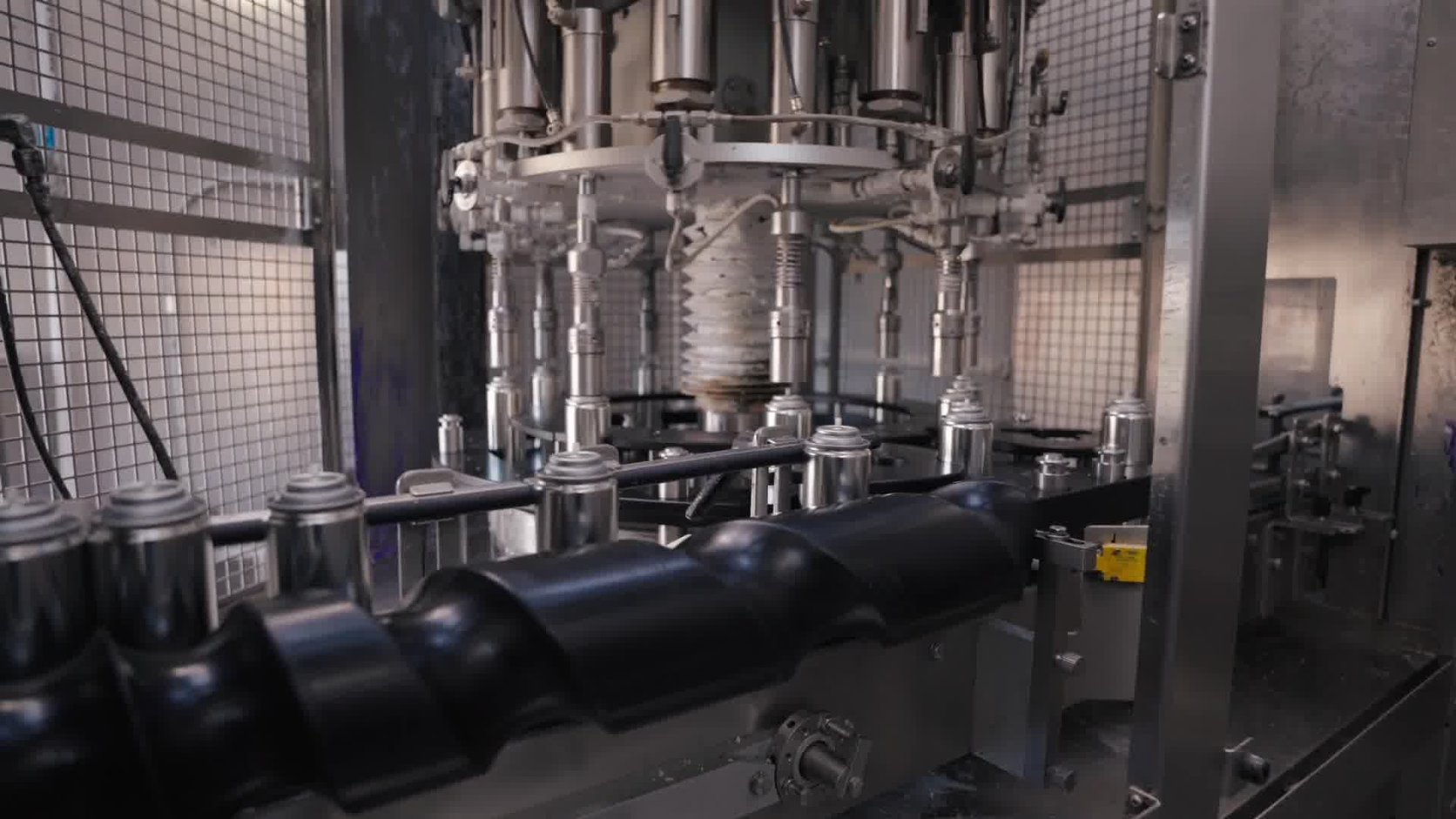
Quality cannot be an afterthought in aerosol manufacturing. Ask specifically about inline crimping and gassing, weight checks, and leak detection. Newer lines may include AI-enabled crimp detection systems. You want to hear about process controls designed for consistency, safety, and regulatory compliance, not vague assurances. Strong quality systems protect you from costly recalls and customer complaints down the line.
Quality is built into our lines, with inline crimping and gassing, weight checks, leak detection, and AI-enabled crimp detection on our newer equipment, all backed by an ERP-driven quality system that gives you full lot traceability from inbound raw material to outbound shipment.
9. What labeling and secondary packaging can you handle?
A finished aerosol product is more than a filled can. Ask whether the manufacturer supports pressure-sensitive and full-wrap labels, regulatory and multilingual labeling, and secondary packaging like tray packs, cartons, and palletized configurations. Handling labeling and packout under one roof means fewer vendors, fewer handoffs, and more consistent results.
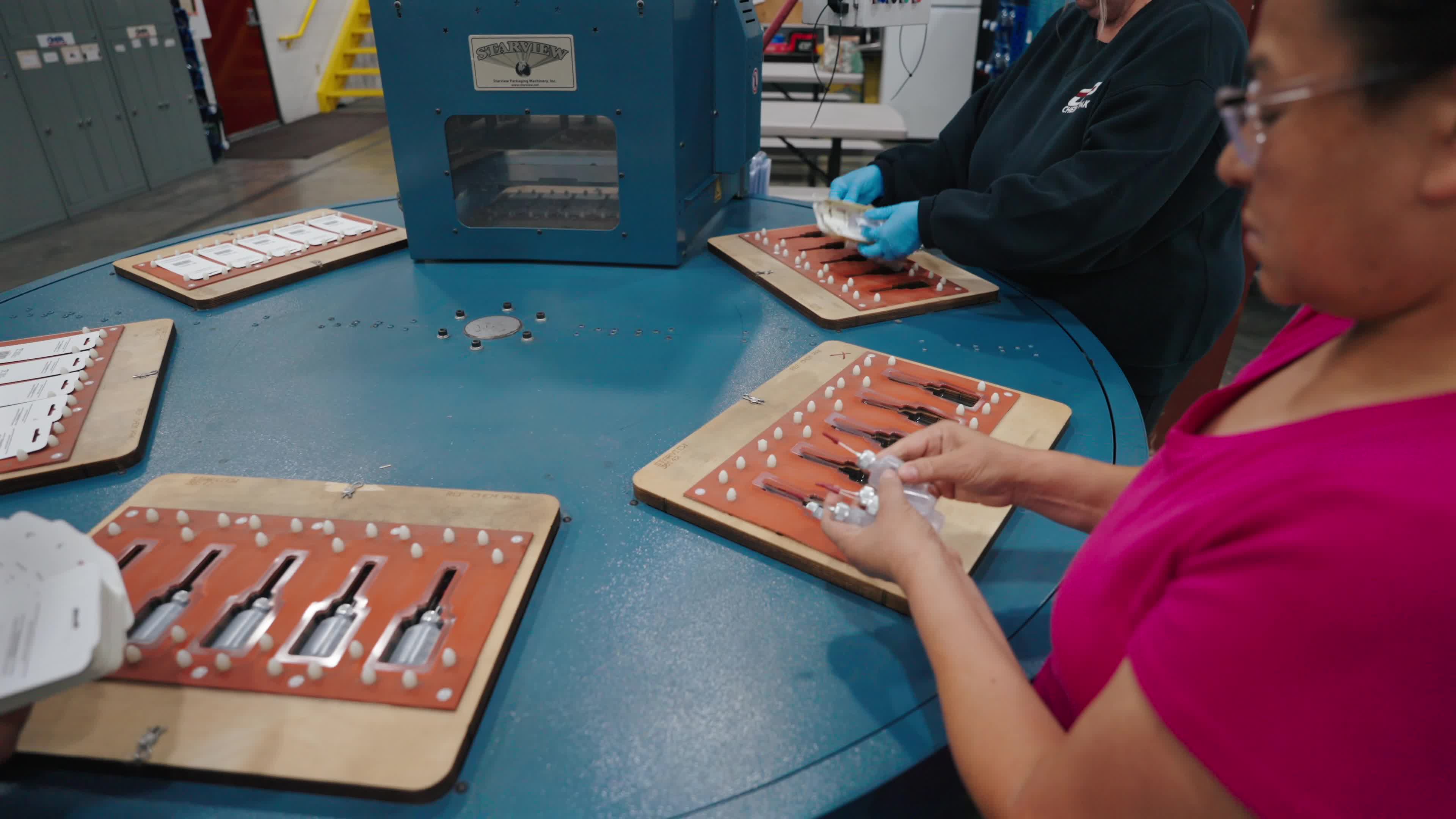
We keep all of that in-house through our specialty packaging operation, from pressure-sensitive and full-wrap labels to regulatory and multilingual labeling and secondary packaging like tray packs, cartons, and palletized configurations.
10. What does your onboarding and commercialization process look like?
A structured process is a sign of a mature manufacturer. Ask how they take a project from first conversation to ongoing production. A clear path (discovery, development when required, validation and stability testing, and commercialization) tells you they have done this many times and will not improvise with your product. Ask what happens after the first production run, too: a good partner transitions you smoothly into ongoing manufacturing support.
That path has a name here: LaunchPath, our four-phase process from discovery through commercialization. After the first commercial run we move you into ongoing support, including formula updates, packaging changes, and new SKU development as you grow.
11. How long have you been doing this, and who will I be working with?
Experience matters in a business where chemistry, pressure, and compliance intersect. Ask how long the manufacturer has been producing aerosols and across which categories. Industrial, automotive, and specialty experience all signal depth. Just as important, ask who your day-to-day contacts will be. The best contract manufacturing relationships operate as true partnerships, with transparent communication and a team that treats your product as if it were their own.
We have been at this for 60 years, across industrial, automotive, and specialty work, and we make our own branded products (Per-Fix, Gun-Savr, Fingerease, and Chem-Pak MRO) right alongside the products we make for our customers. You get a dedicated team that treats your product as if our own name were on the can.
12. Who owns my formula, and how do you protect my intellectual property?
Intellectual property ownership can get muddled in a contract manufacturing relationship, and it is important to get clarity on this up front. The short answer at Chem-Pak is straightforward: what you bring to us is yours. We understand the importance of a brand’s protective moat and we take our responsibility to maintain a clean line of ownership seriously. Your formula, your packaging, and your product are yours before the relationship starts and after it ends. We have confidentiality protocols in place to keep it that way.
The bottom line
The right aerosol contract manufacturer should welcome every one of these questions. Transparency about MOQs, propellants, quality systems, and process is the mark of a partner with nothing to hide and decades of experience to draw on. Evasiveness on any of these points is a reason to keep looking.
For 60 years we have filled aerosols from our facilities in Martinsburg, West Virginia, supporting national programs and full brand portfolios alike with integrated mixing, a full propellant portfolio, and in-house regulatory expertise. If you have a project in mind, contact us and our team will help you map the right path to production.