

Customer-Specific Testing and Validation
Quality does not start on our production floor. It starts with understanding what success looks like for your product.
At the beginning of every project, we work closely with our customers to define the testing and performance criteria that matter most for their application. That includes reviewing product specifications, intended use, regulatory considerations, and any unique performance expectations. From there, we establish a tailored testing plan that aligns with those requirements.
Some products require standard analytical verification, while others call for customized performance testing, stability evaluations, or application-specific validation. Those requirements are documented, built into our quality system, and carried through every production run.
This collaborative approach ensures that we are not just producing to a general standard, but to your standard. It also means there are no surprises at scale. The same criteria used to approve initial batches are the ones used to verify every batch that follows.
Here is what that process actually looks like on our floor, from the moment materials arrive at our dock to the moment finished goods leave it.
Inbound: Inspection of All Raw Materials and Packaging Components
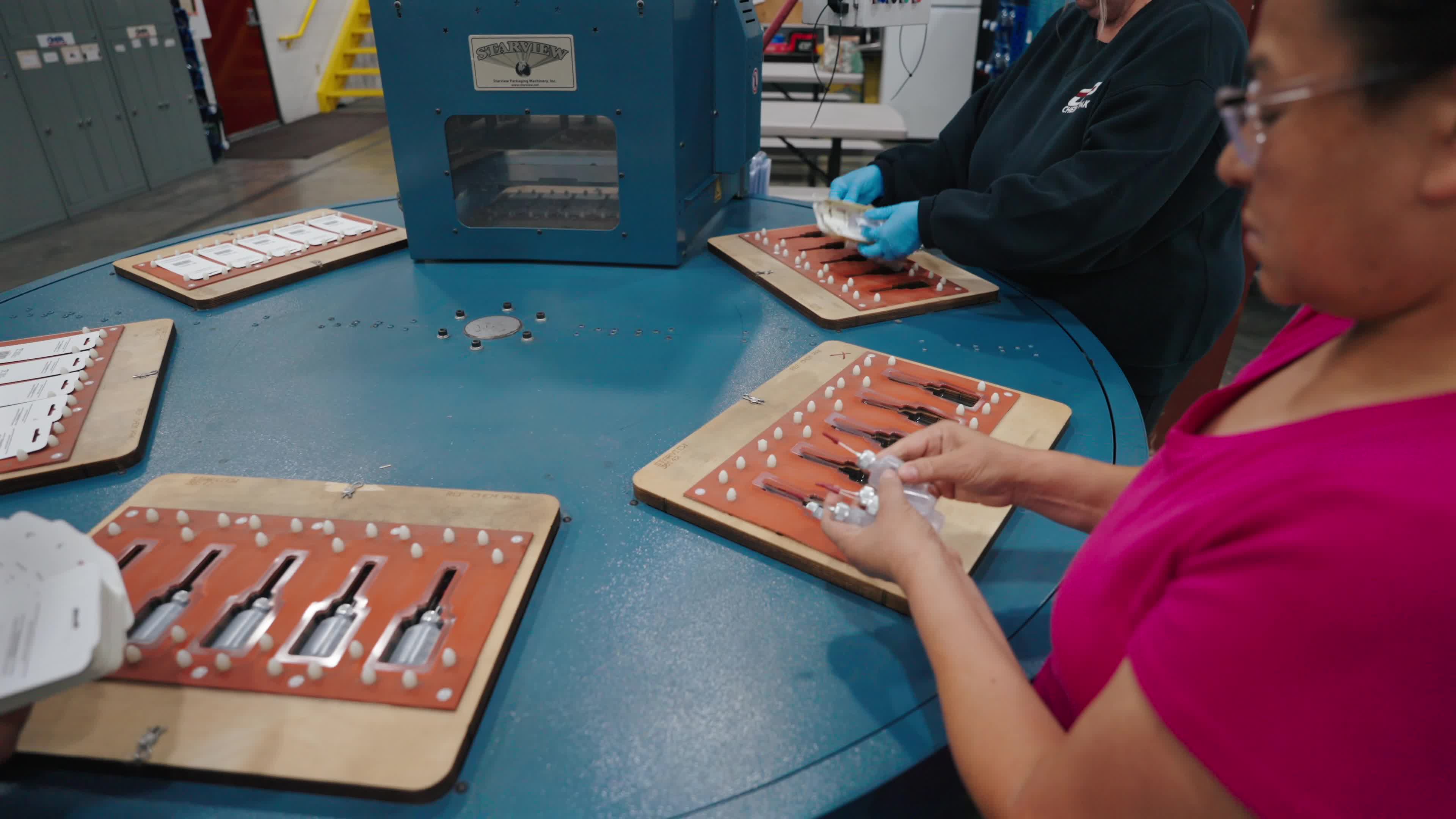
Every raw and customer-supplied material that comes through our door, whether that is a formula component, a label, a can, a valve, or an actuator, goes through inbound inspection before it is released for use. We verify that what arrived matches what was ordered: the right material, and the right quantity, with documentation to back it up. Critical materials get additional testing and verifications.
If something arrives out of spec, we strive to catch it here, not in the middle of a production run. Holding a nonconforming material at receiving is far less costly than discovering a problem after the batch is complete.
Nothing moves to the production floor until it has been reviewed and released.
In-Process: Batch Checks for Performance and Fill Accuracy
Inbound approval gets the materials to the line. In-process quality keeps the run on track once it starts.
Batch Analytical Verifications
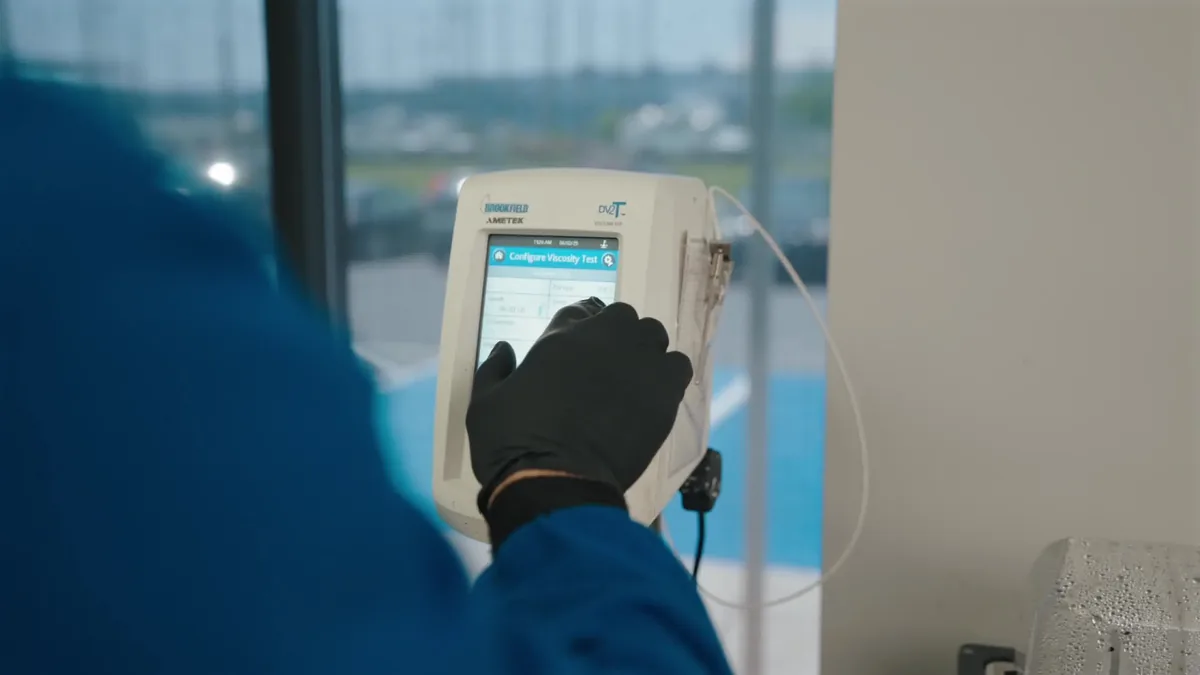
Every processed batch is tested for key analytical properties to ensure it meets our high standards and performs as expected. Nothing leaves the batching room until quality has been verified.
Finished Product Verifications
Throughout production, our quality team performs checks at defined intervals. These are not random spot checks. They are scheduled, documented, and tied to the specifications for that specific product. Critical checks are built into every aerosol run:
Fill Weight Verification
Fill weight is monitored continuously throughout the run. Consistent fill weight means consistent product performance for the end consumer, and it is a core quality indicator on our aerosol lines. Any drift outside of tolerance triggers a stop and review before more product is run.
Full-Can Evacuation Testing
Aerosol cans are tested to confirm that the valve and propellant system function correctly and that the can evacuates fully. This validates both product delivery and safety. A can that does not evacuate properly is not a compliant product, and it does not leave our facility.
For liquid products, in-process checks include fill volume, torque on closures, and label placement accuracy. Every in-process check is recorded as part of the quality record for that production run.
Gloss and Finish Confirmation for Coatings and Specialty Products
For coatings and specialty products, we also confirm gloss and finish against the approved standard. Appearance is part of the product spec, and a finish that does not match what the customer approved is a nonconformance, full stop.
Label Claim Verification for Regulatory and Consumer Confidence
Before finished goods are released, we verify that label claims are accurate and consistent with the product spec. This matters for regulatory compliance, and it matters for the consumer who picks your product off the shelf and reads what is on the label.
Aerosol products are subject to federal and state requirements around propellant content, flammability, VOC compliance, and labeling. Catching a label discrepancy at our facility is a very different outcome than catching it after product has shipped.
Full Lot Traceability Through Our ERP System
Every step of the quality cycle is documented and tracked through our ERP system, giving us full lot traceability from inbound raw material to outbound shipment. If a question ever arises about a specific batch, we can trace it.
That documentation also supports the certificate of conformance and batch records that are available for every shipment. Nothing ships without a complete quality record on file.
Why the Full Cycle Matters
It would be easy to focus quality resources at the end of the process, because that is the most visible point. But a final inspection can only tell you what the product looks like when it is done. It cannot fix a raw material that was out of spec, a fill weight that drifted for the first hundred units, or a label claim that does not match the formula.
The last thing we ever want is for your product to reach the market with a quality issue. That is not a policy statement, it is the reason every one of these checkpoints exists.
The value of a system that covers the full cycle, inbound through outbound, is that problems get caught where they are smallest and cheapest to fix. That protects your product, your timeline, and ultimately your brand.
If you have questions about how our quality process applies to your specific product, I am happy to talk through it.