

At Chem-Pak, we work with hydrocarbon propellants, dimethyl ether (DME), carbon dioxide (CO₂), nitrogen, and HFA-152a. Each has advantages that make it better suited to certain applications.
We touched on propellant selection in our 12 Questions to Ask Before Choosing an Aerosol Contract Manufacturer. Here, we take a closer look at the primary propellant systems and why one may be selected over another.
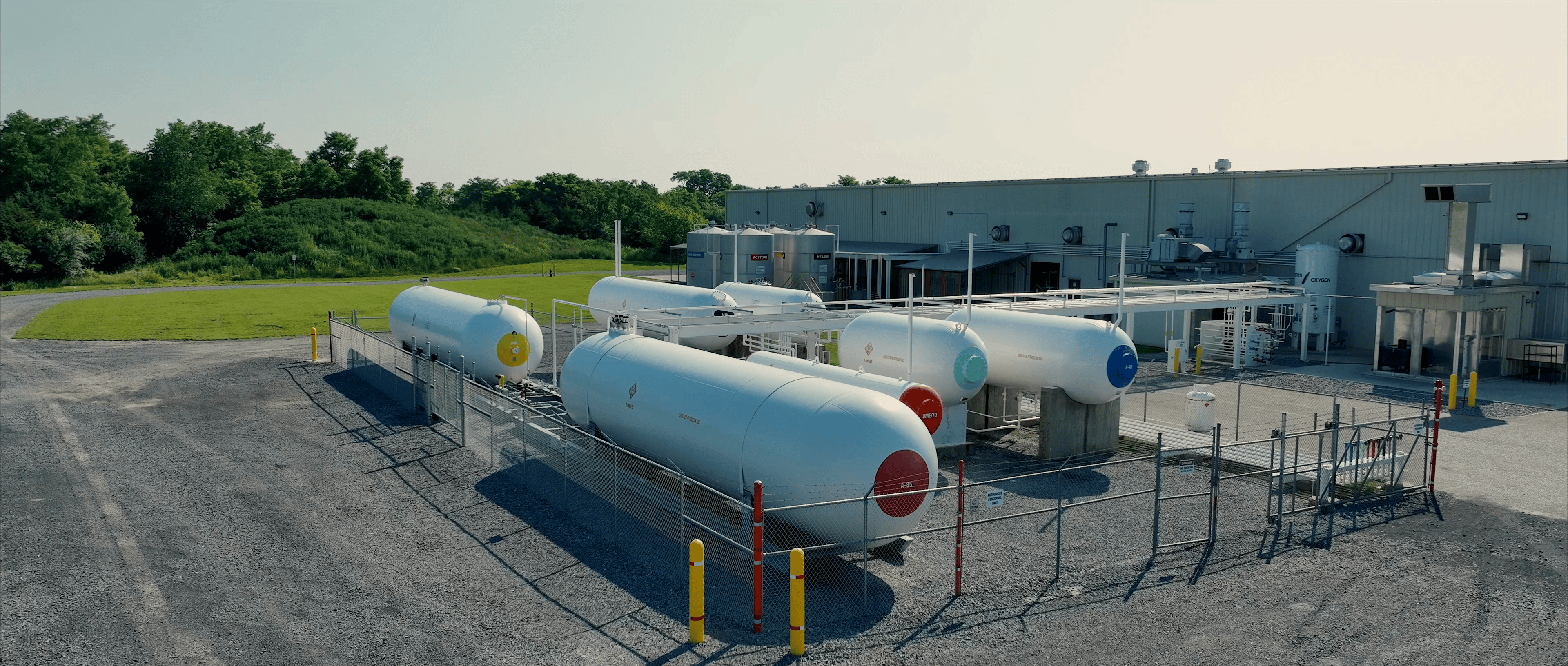
Hydrocarbon propellants are blends of propane, butane, and isobutane. The A46, A70, A85, and A108 designations indicate the approximate vapor pressure of the hydrocarbon blend at 70°F, with A46 at the lower end of the range and A108 at the higher end.
Higher-pressure blends generally provide a more forceful discharge and can help produce finer spray characteristics, while lower-pressure blends provide a softer discharge. Actual spray characteristics also depend on the formulation, valve, actuator, and other elements of the aerosol system.
Hydrocarbons maintain relatively consistent pressure as the aerosol is used. Their combination of good performance, flexibility, and low cost makes them the most common propellant choice for many aerosol products.
The primary tradeoff is flammability. Hydrocarbons are flammable and may also contribute to VOC content depending on the product category and applicable regulations.
Best suited for: Applications where cost-effective, consistent aerosol performance is the priority and flammability is acceptable.
DME is unusual because it functions as both a propellant and a solvent. Its solvency and partial compatibility with water can make it particularly useful in formulations where conventional hydrocarbons do not provide adequate compatibility.
Those same properties mean DME should be evaluated as part of the complete formulation rather than treated simply as a source of aerosol pressure. Its interaction with other ingredients can influence formulation stability and packaging compatibility.
DME is flammable and generally costs more than conventional hydrocarbon propellants.
Best suited for: Formulations that benefit from additional solvency or compatibility between otherwise difficult-to-combine ingredients.
CO₂ and nitrogen are compressed gases rather than liquefied propellants. Both are nonflammable and can be useful when minimizing the propellant's contribution to finished-product flammability is important.
Unlike liquefied propellants, compressed gases lose pressure as product is discharged. Maintaining acceptable spray performance throughout the life of the can therefore requires careful formulation, valve, packaging, and fill-pressure design.
CO₂ and nitrogen also behave differently within formulations, so the appropriate compressed gas should be selected and tested as part of the complete aerosol system.
Best suited for: Products where a nonflammable propellant is desirable and the package can be engineered around compressed-gas performance.
HFA-152a is a fluorinated liquefied-gas propellant that can provide aerosol performance similar in some respects to hydrocarbon systems while offering different environmental and regulatory characteristics.
It is more expensive than hydrocarbon propellants and is itself flammable, so it is generally selected when a specific formulation, environmental, VOC, or regulatory objective justifies its use rather than simply as a performance upgrade.
Best suited for: Applications with specific environmental, regulatory, formulation, or performance requirements that favor HFA-152a despite its higher cost.
The best propellant is the one that works with the entire aerosol system.
A lower-cost propellant may be the right answer for one product, while another may require different solvency, pressure, spray characteristics, flammability properties, or regulatory considerations.
Propellant selection can also affect valve selection, can compatibility, fill pressure, spray pattern, product discharge, manufacturing requirements, shipping, and storage. That is why it should be considered early in product development rather than after the formulation has been finalized.
At Chem-Pak, our R&D, regulatory, and quality team evaluates the propellant as part of the complete formulation and packaging system. Our aerosol manufacturing capabilities are designed to accommodate the different propellant systems required by the products we manufacture.
For contract and private-label customers, the goal is straightforward: select the propellant system that provides the required performance without adding unnecessary cost or complexity.
If you are still developing the product and need help determining the right formulation and propellant system, learn more about our Formula Development process. If your formulation and packaging are already established and you are ready to discuss manufacturing, visit I Have a Formula & Packaging.
What do A46, A70, A85, and A108 mean?
They indicate the approximate vapor pressure of the hydrocarbon blend at 70°F. A46 is at the lower end of the range and A108 at the higher end, allowing the propellant system to be matched to the desired discharge characteristics.
Which propellants are nonflammable?
CO₂ and nitrogen are nonflammable propellants. Whether the finished aerosol receives a particular flammability classification depends on the complete formulation and applicable testing and regulatory requirements.
Why would I use DME instead of a hydrocarbon propellant?
DME provides useful solvent and compatibility characteristics in addition to functioning as a propellant. This can make it valuable in formulations where hydrocarbons alone are not the best fit.
Why use HFA-152a if it costs more?
HFA-152a may make sense when its particular environmental, regulatory, formulation, or performance characteristics provide an advantage for the intended product and market.
Does propellant choice affect VOC compliance?
It can. VOC treatment depends on the propellant, product category, formulation, and applicable regulations. This should be evaluated during formulation development rather than after the product has been finalized.
Randy Duane is President and CEO of Chem-Pak, Inc. He has spent his entire career in the aerosol and liquid manufacturing industry, bringing decades of hands-on expertise to every customer relationship.